
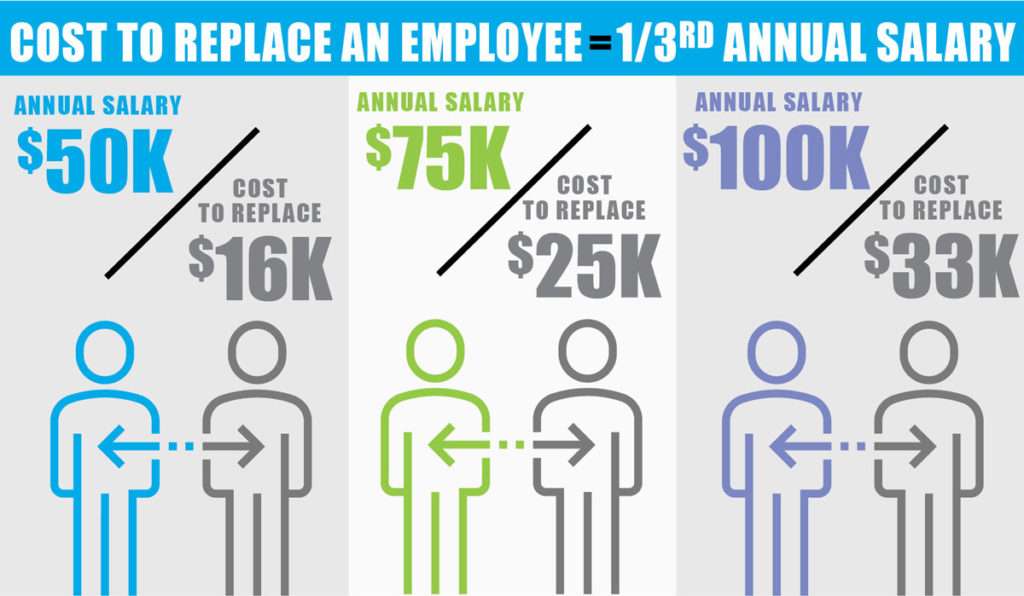
 Let’s face it, employee turnover hurts. It’s disruptive, expensive, and drags down morale. Not to mention the time you now have to devote to identifying, interviewing, and hiring a replacement candidate. The Department of Labor estimates the cost of replacing a single employee to be one third of their annual salary. Additionally hiring the wrong person for a position and then fixing that mistake within 6 months can escalate to as much as 2.5 times the person’s annual salary. Ouch! If you do the math you can imagine how quickly the numbers add up for a large or more highly paid staff.
The cost of employee turnover is real and the risks of making a bad hire following a departure are significant. Often times, a poor pool of candidates, bad timing in the hiring cycle, an out-of-date, uncompetitive salary structure, or simple hiring fatigue contributes to a bad decision.
So what can you do to minimize turnover? Employees are a firm’s biggest asset, yet they can’t be managed like patents or plants or raw materials. They’re people. They have egos, emotions, and goals. So, when they feel unappreciated, underpaid, or overworked – or all three – there’s a good chance they’ll be looking for a change.
Communication is key to employee retention. Employees need to know the company’s goals and how they fit into achieving those goals. Employees need honesty and transparency. They want opportunities for advancement, training, and growth and should know how they can access them. And, probably most importantly, they want to be recognized and rewarded for good work. An astute manager will identify ways to turn average employees into great employees before a departure occurs – sometimes a simple shift in job responsibilities to better leverage an employee’s strengths can be a game changer. Putting the right people into the right roles is a critical skill of a good manager.
Continuous, regular feedback is essential in today’s workplaces. Such an approach ensures that employees are constantly hearing from management and management is constantly hearing from employees. Waiting for an annual performance review can cause a gap all year between expectations and actual performance. Why wait? Talk to your employees regularly, and that mean’s listening too – about what’s going well, what’s not working, about career goals. And let the employee know about performance metrics, accountability, opportunities for advancement and growth, and most importantly, about how they’re valued and important to the firm.
Even the best managers won’t prevent every departure, but if an open dialogue is cultivated between employer and employee, turnover, and its associated cost and disruption can be minimized.