
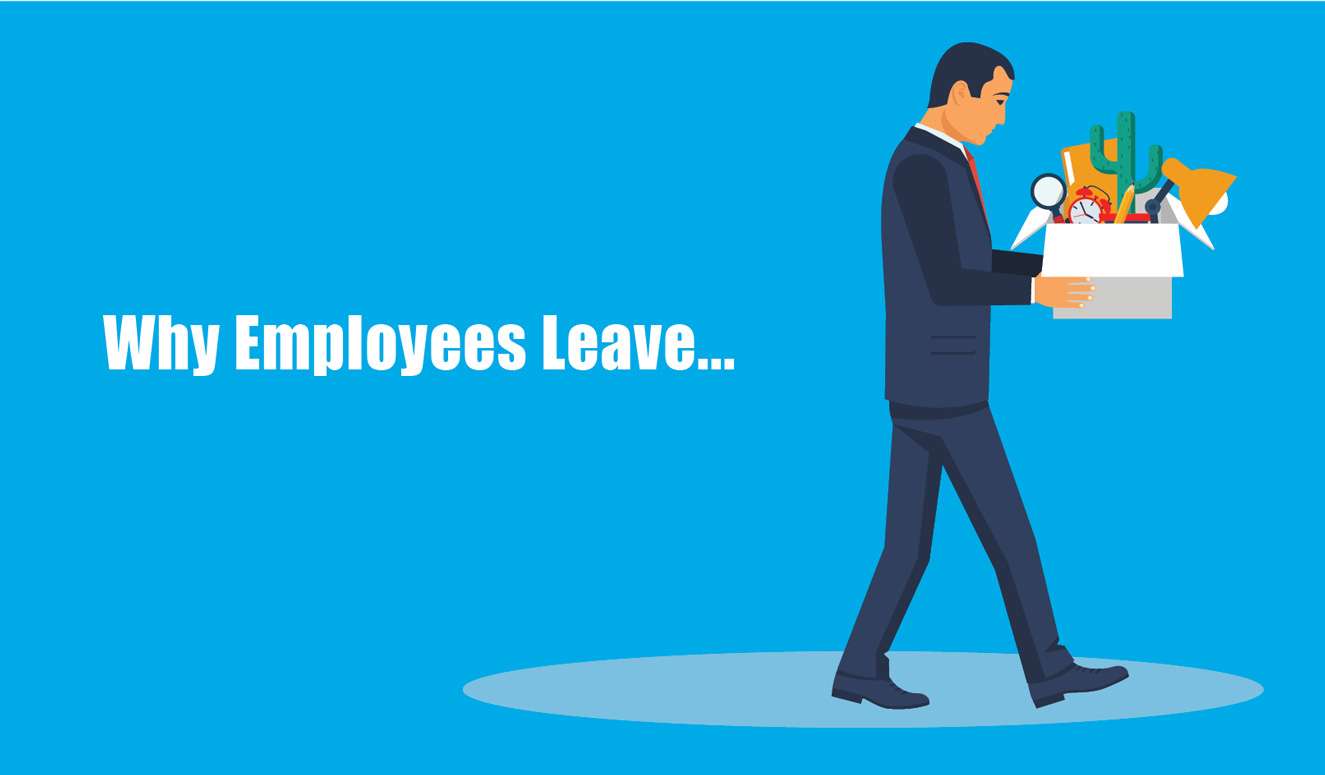
 Employees leave—it happens all the time. It’s easy to compartmentalize these departures, chalking them up “for the best” or “all about money” or worse yet, vilify the departing employee in an attempt to ignore or minimize the organization’s failings. Irresponsible managers will take this approach. Smart managers will do just the opposite – listen, reflect, research, and draw conclusions—and identify recurring themes from each employee departure in an attempt to improve workforce retention in the future.
Employees leave for a myriad of reasons, but many can be grouped into three major themes – interpersonal, culture, and job function.
- Interpersonal: An employee leaving for interpersonal reasons will cite his or her poor relationship with their manager or co-workers, a lack of trust, unfair recognition of job performance, a lack of empathy and support from management, and fatigue from fighting for more recognition and more compensation.
- Culture: Those citing corporate culture-themed reasons will focus on the company’s lack of vision, an inability to connect with or believe in the organization’s mission or goals, too many internal politics, or their desire to “move faster or think bigger” than the organization can accommodate.
- Job Function: Dissatisfaction with the job function focuses on a lack of motivation, an absence of autonomy and empowerment, an inability to use skills, a failure to see the link between the daily job functions and the larger goals, boredom, and often “no fun.”
Smart organizations will create the framework to value and nurture employees in the first place, but also reflect when the inevitable departures do occur. Exit interviews provide a good opportunity to hear from employees about their work experiences, both positive and negative. Often when an individual has resigned, they feel the freedom the speak more honestly and directly about their work experience, which is extremely valuable to an interested organization.
So, take the time to understand the themes of why people depart, create an organization that addresses these themes, and value the feedback that departing employees can impart to improve your organization for the future. In doing so, you just might see your employee retention and productivity rise.